


What are Vital Signs?
What are Vital Signs?
Vital signs are key indicators reflecting whether the body’s physiological condition is stable. Clinically, they are used to quickly assess a person’s health status, detect risks of acute deterioration, and serve as an important basis for long-term chronic disease management and caregiving decisions.
The Six Core Vital Signs (HR / RR / BP / Temperature / SpO₂ / HRV)
-
Heart Rate (HR): Number of heartbeats per minute.
-
Respiratory Rate (RR): Number of breaths per minute.
-
Blood Pressure (BP): Pressure exerted by blood on the vessel walls as it circulates.
-
Body Temperature: Indicates whether the body’s temperature regulation is normal.
-
Oxygen Saturation (SpO₂): The blood’s capacity to carry oxygen.
-
Heart Rate Variability (HRV): Reflects how the autonomic nervous system regulates the heart.
Why Elderly Homes and Home-based Care Must Track Vital Signs
-
Early Risk Detection: Abnormal heart rate or breathing is often an early warning sign of deterioration.
-
Prevention of Night-time Emergencies: Apnea, wandering at night, or prolonged absence from bed can be flagged in advance.
-
Improved Care Quality: Provides scientific data to assist doctors and families in making informed care decisions.
How Does Non-invasive Mattress Monitoring Work? (Fiber-optic Micro-vibration Technology)
Fiber-optic sensors are placed under the mattress. By detecting micro-vibrations from the body, the system analyzes heart rate, respiratory rate, HRV, body movement, in/out-of-bed status, and apnea episodes—without requiring the elderly to wear any devices. Monitoring runs continuously, day and night, without intrusion.
Common Abnormalities and Risk Scenarios
-
Apnea: Detects interrupted breathing in time to allow life-saving intervention.
-
No Return to Bed: Alerts if a resident has been out of bed for too long, preventing falls or other accidents.
-
Night-time Wandering: For dementia patients, provides early warnings to prevent getting lost or entering unsafe areas.
Practical Use in Hong Kong Elderly Homes
-
Multi-bed Management: View vital signs of multiple beds simultaneously.
-
Real-time Alerts: Abnormal beds flagged with color indicators for quick response.
-
Health Reports: Generates both individual and overall trend reports to support medical assessments and family communication.
Common Vital Signs Reference Ranges (for adults; actual values must be interpreted by healthcare professionals based on age and medical history)
-
Heart Rate: 60–100 bpm
-
Respiratory Rate: 12–20 breaths per minute
-
Blood Pressure: Around 120/80 mmHg (varies by individual)
-
Body Temperature: ~36.5–37.5 °C
-
Oxygen Saturation (SpO₂): 95–100%
-
HRV: Varies widely; lower HRV may indicate stress or health issues.
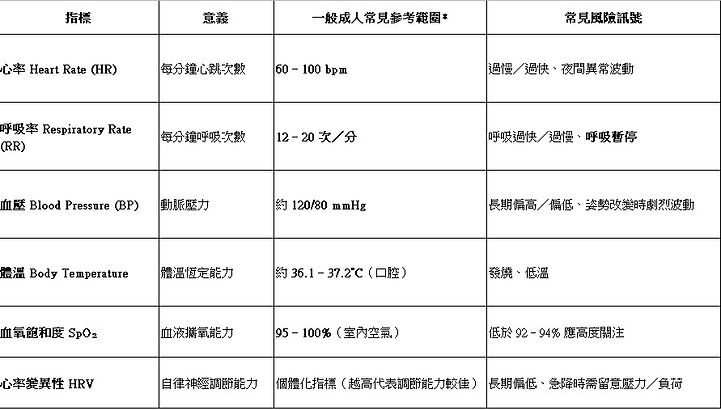
For educational reference only. Not intended for diagnosis. Acceptable ranges and interpretations for elderly and chronic disease patients must be determined by healthcare professionals.
Extended Indicators (Common in Care Settings)
-
Body Movement / In–Out-of-Bed Status: Abnormal frequency of turning during sleep or prolonged time out of bed (“not returned to bed”).
-
Sleep Quality: Sleep onset latency, ratio of deep vs. light sleep, number of awakenings.
-
Event Detection: For example, number of sleep apnea episodes, prolonged immobility, or trends in night-time wandering.
Why Are Vital Signs Especially Important for Elderly Homes and Home Care?
-
Early Warning: Subtle changes in heart rate, respiratory rate, or SpO₂ are often early signs of acute deterioration.
-
Chronic Disease Management: Long-term tracking of trends (e.g., HRV, night-time heart rate) helps optimize medication and rehabilitation.
-
Safety in Bed (Day & Night): Real-time detection of apnea, prolonged absence from bed, or wandering prevents high-risk events.
-
Objective Communication: Converts subjective impressions (“looks fine”) into objective data reports, enhancing family trust and improving clinical decision-making.
Methods of Measuring Vital Signs (Non-invasive as Trend Indicators)
-
Wearables: Smartwatches or chest straps (using PPG/ECG/accelerometers).
-
Mattress-based / Under-bed Sensors: Fiber-optic micro-vibration (similar to BCG) or pressure sensing, capable of monitoring HR/RR/HRV, body movement, in/out-of-bed status, and apnea detection—without contact.
-
Contactless Radar: mmWave/UWB radar to detect chest movements.
👉 Our system uses mattress-based, non-invasive monitoring, offering zero burden from wearables and continuous long-term tracking. It is particularly well-suited for elderly care and multi-bed management in institutions.
FAQ
Q1: What are vital signs, and why monitor them long-term?
A: Vital signs are key indicators of physiological stability (e.g., heart rate, respiratory rate, blood pressure, body temperature, SpO₂, HRV). Long-term monitoring helps detect deterioration early, especially for seniors and chronic disease patients.
Q2: How does non-invasive mattress monitoring work? Is it accurate?
A: Highly sensitive sensors are placed under the mattress to capture micro-vibrations and breathing patterns. The system estimates HR/RR/HRV, body movements, and in/out-of-bed status. The advantage is no wearables, 24/7 continuous monitoring, making it ideal for elderly users.
Q3: What risks can it detect?
A: Apnea episodes, abnormal heart rates, prolonged absence from bed, and night-time wandering trends. The system provides instant alerts to caregivers or family members.
Q4: Does it monitor during the day as well?
A: Yes. It can monitor during naps or extended daytime bed rest, helping avoid missed abnormalities during the day.
Q5: Can the data be used for medical diagnosis?
A: The system provides trends and alerts for caregiving and medical reference. Clinical diagnosis must always be made by healthcare professionals.
Please contact us